Sports Injury Treatment and Rehabilitation in Nevada City
Advanced Diagnosis. Non-Surgical Treatment. A Smarter Path Back to Your Sport.
An injury does more than cause pain. It can take you off the trail, out of the gym, away from your sport, and leave you uncertain about what your body can safely handle.
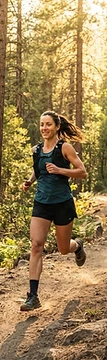 Trail Running
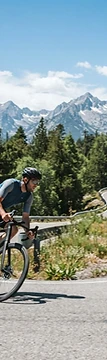 Cycling
 Hiking
At Sierra Spine & Fitness, we provide sports injury treatment for athletes and active adults throughout Nevada City, Grass Valley, and the surrounding communities. Our approach combines advanced musculoskeletal diagnosis, chiropractic and hands-on care, non-surgical regenerative therapies, and progressive rehabilitation.
We do not simply treat the painful area and send you back to the same demands that caused the problem. We work to identify the injured tissue, understand why it became overloaded, and rebuild the strength, mobility, coordination, and capacity required for your activity.
If you are searching for a sports injury doctor in Nevada City or sports injury treatment near Grass Valley, we treat common athletic injuries including running injuries, cycling injuries, tendon pain, sprains, and overuse injuries — without surgery or injections when appropriate. Our sports medicine approach serves athletes and active adults across Nevada County.
The goal is not merely to hurt less. It is to help you return more capable and more confident.
Sports Medicine for Athletes — and Everyone Who Wants to Stay Active
You do not have to be a professional athlete to deserve a sports-medicine approach.
Many of our patients are runners, hikers, cyclists, skiers, weightlifters, martial artists, court-sport players, recreational competitors, and active adults who simply want to keep doing what they enjoy.
- Return to running, hiking, or cycling
- Get back to weightlifting or the gym
- Resume skiing or snowboarding
- Return to pickleball, tennis, or golf
- Recover from a work or training injury
- Prepare for an upcoming event or season
- Address an injury that never fully recovered
- Continue being active without constantly managing pain
- Build greater resilience against recurring problems
Whether your goal is competition, recreation, work, or keeping up with your family, your treatment should reflect the demands you need your body to handle.
Sports Injuries We Commonly Evaluate
Sports and activity-related pain can involve tendons, ligaments, muscles, joints, cartilage, nerves, or the spine. Different tissues may produce similar symptoms, which is why an accurate diagnosis must come before treatment.
Shoulder Injuries
- Rotator cuff tendinitis and tendinopathy
- Partial rotator cuff tears
- Calcific tendinitis
- Shoulder impingement symptoms
- Biceps tendinopathy
- AC joint pain
- Shoulder instability
- Overhead and throwing-related pain
Elbow, Wrist and Hand Injuries
- Tennis elbow
- Golfer's elbow
- Distal biceps and triceps tendinopathy
- Wrist tendinopathy and sprains
- De Quervain's tenosynovitis
- Carpal tunnel syndrome
- Grip-related pain
- Repetitive-use injuries
Hip and Thigh Injuries
- Gluteal tendinopathy
- Greater trochanteric pain syndrome
- Proximal hamstring tendinopathy
- Adductor and groin injuries
- Hip-flexor and iliopsoas tendinopathy
- Hip impingement-related pain
- Hip osteoarthritis
- Muscle strains
Knee Injuries
- Meniscus-related knee pain
- ACL, MCL and LCL sprains
- Patellar tendinopathy
- Quadriceps tendinopathy
- Patellofemoral pain
- Knee osteoarthritis
- Running- and jumping-related knee pain
Foot and Ankle Injuries
- Achilles tendinopathy
- Plantar fasciitis
- Ankle sprains
- Peroneal and posterior tibialis tendon disorders
- Chronic heel pain
- Foot and arch-related pain
- Return-to-running problems
Spine and Pelvic Injuries
- Low-back pain
- Neck and upper-back pain
- Disc-related pain
- Facet and joint-related pain
- SI joint-related pain
- Radicular symptoms
- Lifting-related injuries
- Cycling- and posture-related pain
Better Treatment Starts With Diagnostic Certainty
Sports injuries are often treated according to where they hurt rather than which tissue is actually involved. But shoulder pain is not a diagnosis. Neither are knee pain, heel pain, hip pain, or back pain.
At Sierra Spine & Fitness, we begin with a detailed history and clinical examination. We evaluate the painful tissue, surrounding joints, strength, mobility, movement control, and the demands of your sport or activity.
Your evaluation may include:
- Orthopedic and neurological testing
- Strength and range-of-motion assessment
- Tendon and ligament testing
- Functional movement assessment
- Squatting, stepping, balancing, jumping, or landing analysis
- Running-, lifting-, or sport-specific movement evaluation
- Diagnostic musculoskeletal ultrasound
- Digital X-rays when appropriate
- Referral for MRI or orthopedic evaluation when necessary
Diagnostic Musculoskeletal Ultrasound
Musculoskeletal ultrasound allows us to visualize many tendons, ligaments, muscles, joints, bursae, nerves, and other soft tissues in real time.
Depending on the injury, ultrasound may help identify:
- Tendon thickening or degeneration
- Partial or full-thickness tendon tears
- Calcific deposits
- Ligament sprains
- Muscle injuries
- Bursitis
- Joint swelling
- Scar tissue
- Abnormal tissue movement
- Differences between the injured and uninjured side
Ultrasound can also be used dynamically, allowing certain tissues to be evaluated while you move. This can provide information that is not always available from a static image.
No single test tells the entire story. Ultrasound findings must be interpreted alongside your symptoms, examination, movement, and functional limitations. When another form of imaging is more appropriate, we will recommend it.
Better treatment starts with diagnostic certainty.
Why Did the Injury Happen?
Sometimes the cause is obvious: a fall, collision, awkward landing, sudden sprint, or heavy lift.
Other injuries develop gradually because the demands placed on a tissue exceed its current capacity. This is common with tendon problems, repetitive-use injuries, running-related pain, and symptoms that appear after a rapid increase in training.
Contributing factors may include:
- Sudden changes in training volume or intensity
- Inadequate recovery
- Reduced strength or endurance
- Limited joint mobility
- Poor coordination or movement control
- Previous injury
- Changes in footwear or equipment
- Repetitive occupational demands
- Incomplete rehabilitation
- Returning to activity too quickly
- Sport-specific technical or mechanical factors
Our objective is not to find one supposedly "perfect" movement pattern. It is to identify the factors that matter in your case and improve your ability to tolerate the demands you place on your body.
The Role of Chiropractic Care
Athletic movement depends on coordinated motion through multiple joints and regions. A painful knee may be influenced by the hip, ankle, or foot. Shoulder function depends on the shoulder blade, upper back, ribs, and neck. A running injury may involve more than the tissue that hurts.
Chiropractic and hands-on care may be used to:
- Improve joint mobility
- Address mechanical restrictions
- Reduce painful muscle guarding
- Restore movement options
- Improve comfort during rehabilitation
- Help the body move more efficiently
- Address associated spine or extremity dysfunction
Hands-on care can create better conditions for movement, but it is not the entire solution. Lasting improvement requires the injured area to progressively regain strength and capacity.
Non-Surgical Regenerative Therapies
Sierra Spine & Fitness offers advanced technologies that may be incorporated into sports-injury treatment when appropriate.
These therapies are not selected from a menu or applied as a one-size-fits-all package. The right treatment depends on the diagnosis, tissue involved, severity and duration of the injury, symptom irritability, and your goals.
Focused Shockwave Therapy
Focused shockwave delivers acoustic energy to a precisely controlled area and depth. It may be particularly useful for persistent or localized tendon, ligament, bone, and joint-related conditions. It is commonly considered for problems such as:
- Achilles tendinopathy
- Plantar fasciitis
- Rotator cuff tendinopathy
- Calcific tendinitis
- Tennis and golfer's elbow
- Patellar tendinopathy
- Proximal hamstring tendinopathy
- Gluteal tendinopathy
- Selected bone and joint-related conditions
Shockwave therapy is intended to stimulate biological activity, influence pain signaling, and support tissue remodeling. It is performed without incisions or injections.
Radial Shockwave Therapy
Radial shockwave distributes mechanical energy through a broader, more superficial region. It may be used for muscles, tendons, fascia, and surrounding tissues that influence movement and recovery. Focused and radial shockwave may be used individually or together, depending on the location and treatment objective.
Extracorporeal Magnetotransduction Therapy, or EMTT, uses rapidly changing electromagnetic fields to interact with tissues at the cellular level. EMTT is non-invasive and may complement shockwave and rehabilitation for selected tendon, ligament, joint, bone, and soft-tissue conditions. Because it does not require forceful pressure over the injured area, it may also be useful when the tissue is sensitive.
Therapeutic red and infrared light energy may be used to support cellular activity, circulation, and the modulation of pain and inflammation. Laser therapy is comfortable and non-invasive. It may be incorporated into treatment for selected tendon, ligament, muscle, joint, and nerve-related conditions.
Technology Can Stimulate Tissue. Loading Teaches It What to Become.
Advanced treatment may reduce pain and help create better conditions for recovery. But the body ultimately has to become capable of handling force again.
That is why progressive rehabilitation is not an optional add-on at Sierra Spine & Fitness. It is part of the treatment.
Depending on your injury and goals, rehabilitation may progress through:
- Pain-limited mobility
- Isometric loading
- Progressive strength training
- Balance and proprioceptive exercises
- Single-leg or single-arm control
- Heavy, slow resistance
- Carrying, pushing, pulling, or lifting
- Running and jumping progressions
- Landing and change-of-direction training
- Speed, power, and endurance development
- Sport- or activity-specific preparation
Exercises are selected according to your present capacity and progressively adjusted as your body adapts.
The goal is not to avoid stress forever. It is to restore your ability to tolerate the right stress.
Diagnose. Treat. Load. Adapt.
Our sports-injury approach follows four connected steps:
1. Find the Problem
Identify the involved tissues and the mechanical, functional, and training factors contributing to the injury.
2. Create the Conditions for Recovery
Use the appropriate combination of chiropractic care, hands-on treatment, focused or radial shockwave, EMTT, laser, activity modification, and other strategies.
3. Give the Body the Right Stimulus
Progressively restore mobility, strength, coordination, endurance, and tolerance to load.
4. Build the Capacity to Do More
Prepare your body for the demands that matter to you — from everyday life and recreational exercise to training, competition, work, and sport.
See it. Treat it. Load it. Restore it.
Do I Need to Stop My Sport Completely?
Not always.
Complete rest may temporarily reduce symptoms, but it does not restore the capacity required for activity. In many cases, training can be modified rather than eliminated.
We may temporarily adjust:
- Training volume
- Exercise intensity
- Running distance or pace
- Hills, jumping, or speed work
- Range of motion
- Resistance or repetition count
- Frequency of competition or practice
- Specific movements that overload the injured tissue
The objective is to find an appropriate level of activity while progressively rebuilding capacity. Some injuries do require a period of protection, immobilization, advanced imaging, or surgical consultation. Your examination helps us determine which approach is appropriate.
Experience That Connects Treatment With Performance
Dr. Craig Roberts combines decades of clinical experience with advanced musculoskeletal diagnostics, chiropractic care, exercise science, and progressive rehabilitation.
He graduated summa cum laude and valedictorian from Western States Chiropractic College, earned a bachelor's degree in Human Biology, and completed advanced postgraduate training in chiropractic neurology. His background also includes certification and training in strength and conditioning, spinal trauma, rehabilitation, and soft-tissue treatment.
Dr. Roberts has worked with recreational, competitive, professional, and high-level athletes from sports including:
- Running and track
- Cycling and mountain biking
- Powerlifting and bodybuilding
- Martial arts
- Football
- CrossFit
- Kayaking
- Triathlon
- Strength and fitness sports
The same principles that help an athlete return to competition can help an active adult return to hiking, working, training, or living without fear of reinjury.
Sports Injury Care Built for How Nevada County Lives
Nevada County is an active community. We run its roads and trails, ride its hills, lift weights, ski the mountains, play court sports, work physically demanding jobs, and spend time outdoors.
Treatment should reflect the life you are trying to return to. At Sierra Spine & Fitness, success is not measured only by a lower pain score. It is measured by what you can do again:
- Run without guarding
- Ride without symptoms building
- Lift with confidence
- Return to practice
- Hike the trail
- Complete your workday
- Rejoin your team
- Prepare for your next event
- Trust your body again
Frequently Asked Questions
Get Back to What You Enjoy
Pain relief is important. But it is not the finish line.
The real goal may be returning to the trail, the gym, the bike, the slopes, the court, the field, your next race, or the activities that make you feel like yourself.
At Sierra Spine & Fitness, we combine advanced diagnosis, non-surgical regenerative therapies, chiropractic care, and progressive rehabilitation to help you reduce pain, restore function, and build the capacity to do more.
Schedule Your Sports Injury Evaluation →Explore the technologies behind your care
Get recovery tips in your inbox
Monthly insights on sports injury care, regenerative therapies, and staying active — delivered straight from Sierra Spine & Fitness.
Stop Guessing at What Is Holding You Back
You do not need to decide whether you need ultrasound, X-rays, shockwave, EMTT, laser, chiropractic care, rehabilitation, or an orthopedic referral. That is our job. Your first step is a thorough evaluation — let's find your answer.
Pain that won't go away deserves a better answer. Let's find yours.
Schedule your evaluation today.
We serve athletes and active adults in Nevada City, Grass Valley, and across Nevada County. Your first step is a thorough evaluation — we'll listen, examine the injury, and explain the best path forward.
582 Searls Ave, Nevada City, CA 95959
- Monday9:00am – 1:00pm, 2:00pm – 6:00pm
- Tuesday9:00am – 1:30pm, 2:00pm – 4:00pm
- Wednesday9:00am – 1:00pm, 2:00pm – 6:00pm
- ThursdayClosed
- Friday9:00am – 4:00pm
- Saturday & SundayClosed